

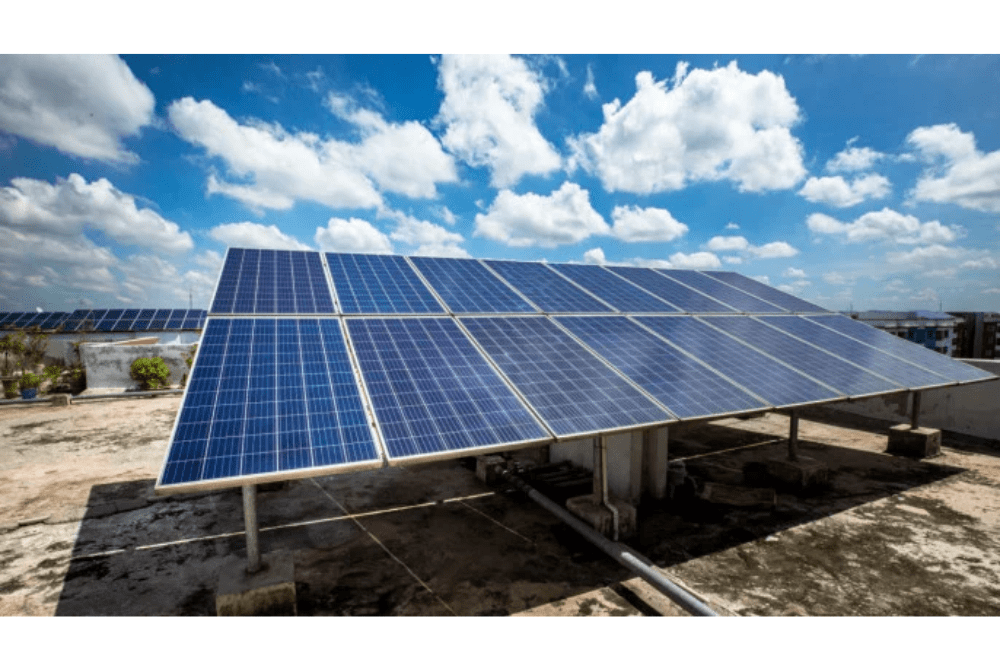
Bangladesh is moving forward with one of its most significant renewable energy initiatives as the country plans to establish its largest solar power plant in Rampal, Bagerhat. With a planned capacity of 442MW and an estimated investment of Tk2,502.39 crore, the project reflects a strategic effort to strengthen energy security while supporting long-term economic growth. As the country continues to expand its industrial base and improve living standards, the need for reliable and cost-effective electricity has become more critical than ever.
The Bangladesh Power Development Board has taken the lead in this initiative, with the majority of the funding, Tk2,127 crore, expected to come from the Power Development Fund, while Tk375.94 crore will be financed from its own resources. The project proposal has already been submitted to the Planning Commission for approval and is being processed on a priority basis, indicating the importance of this investment within the national energy strategy.
Read More: Bangladesh Secures 200,000 Tonnes Urea as Prices Rise 54%
One of the most notable aspects of the Rampal solar project is its competitive tariff. The proposed electricity price stands at Tk6.18 per unit, which is significantly lower compared to similar renewable projects in the country. For instance, the recently approved 220MW solar power plant in Sonagazi, Feni, has a tariff of Tk8.87 per unit, making it approximately 43% more expensive than Rampal. This cost advantage is primarily due to lower infrastructure requirements and reduced expenses in land development, engineering, and transmission systems.
The Rampal site offers a unique advantage in terms of readiness and cost efficiency. The Bangladesh Power Development Board had already acquired 1,834 acres of land in the area back in 2012, with Block B currently available for development. A feasibility study conducted in May 2025 recommended utilizing 685 acres of this land for a grid-connected solar facility, noting that minimal additional development would be required. This has significantly reduced construction costs, with the per megawatt cost estimated at Tk5.66 crore, compared to Tk6.27 crore for the Sonagazi project.
From an economic perspective, the project is expected to generate substantial returns. Annual revenue from the Rampal solar plant is projected to reach Tk352.41 crore, demonstrating its financial viability alongside its environmental benefits. By delivering electricity at a lower cost, the project can reduce the overall burden on the national grid and help stabilize energy prices, which is essential for both businesses and consumers.
The timing of this initiative is particularly important given Bangladesh’s rapidly growing electricity demand. According to projections under the Integrated Energy and Power Master Plan 2023, peak electricity demand is expected to reach 29,257MW by 2030, nearly doubling the highest recorded generation of 16,794MW as of July 2025. This gap highlights the urgent need for new generation capacity, especially from sustainable and diversified energy sources.
In addition to addressing demand, the Rampal solar project aligns closely with Bangladesh’s broader policy goals. Under the Renewable Energy Policy 2025, the government aims to generate 20% of its electricity from renewable sources by 2030 and 30% by 2040. However, current renewable capacity remains limited, making large-scale investments like Rampal essential for achieving these targets. By reducing reliance on fossil fuels, the project also contributes to Bangladesh’s commitments under the Paris Climate Agreement.
Beyond policy alignment, the project is expected to have a direct impact on economic development. Reliable and affordable electricity is a key driver of industrial productivity, particularly in sectors such as manufacturing, export-oriented industries, and the growing ICT and digital economy. As Bangladesh continues its transition toward a more technology-driven economy, stable energy supply will play a crucial role in sustaining growth and attracting foreign investment.
Read More: Unilever Spins Off Food Business in $44.8 Billion McCormick Deal
Moreover, the diversification of energy sources enhances national resilience. Dependence on imported fossil fuels exposes the economy to global price volatility and supply disruptions. By investing in solar power, Bangladesh is taking a proactive step toward reducing these risks and ensuring a more stable and predictable energy future.
Officials involved in the project have described it as a timely and transformative initiative. Compared to existing solar projects, the Rampal plant not only offers larger capacity but also delivers electricity at a more economically viable rate, making it a model for future renewable investments in the country.
As Bangladesh continues to navigate the challenges of energy demand, economic expansion, and environmental sustainability, the Rampal solar project stands out as a strategic milestone. It represents a balanced approach that combines cost efficiency, capacity expansion, and long-term sustainability, positioning the country for stronger economic performance and energy security in the years ahead.