

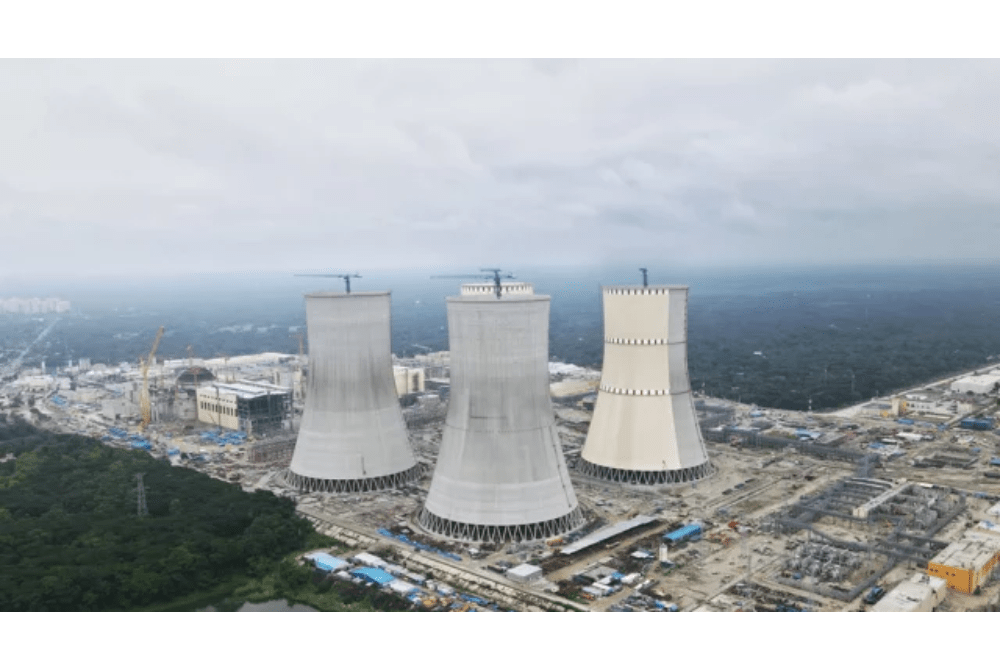
Bangladesh has reached a historic milestone as uranium fuel loading begins at the Rooppur Nuclear Power Plant, marking the country’s formal entry into the global nuclear energy community as the 33rd nation to use nuclear power. This step represents the final phase before commercial electricity generation and signals a major shift in Bangladesh’s long-term energy strategy.
Read More: Liquidity Boost Signals Reform Momentum as Tk20,000 Crore Injected
The fuel loading process will take approximately 30 days, followed by another 34 days of testing and controlled nuclear reactions to ensure safety and operational readiness. After these stages, the plant will gradually begin power generation, with initial electricity supply of around 300 megawatts expected to be connected to the national grid by August. Achieving full operational capacity, however, will take close to 10 months as the system undergoes phased testing and scaling.
The Rooppur Nuclear Power Plant, located in Pabna, is the largest single infrastructure project in Bangladesh’s history. It consists of two units, each with a capacity of 1,200 megawatts, bringing the total planned generation to 2,400 megawatts. Once fully operational, the plant is expected to meet approximately 10 to 12 percent of the country’s total electricity demand, significantly strengthening energy security.
From an economic perspective, the project holds substantial long-term value. Officials estimate that the plant can save up to $1 billion annually by reducing reliance on imported fossil fuels. Compared to coal and oil-based power generation, nuclear energy offers more stable and cost-efficient electricity over time, which is critical for industrial growth, export competitiveness and overall economic expansion. The plant also has a long operational life of around 60 years, with the potential to extend further through maintenance and upgrades.
Beyond cost savings, the project contributes to environmental sustainability. It is expected to reduce carbon emissions significantly compared to conventional power sources, helping Bangladesh align with global climate commitments while meeting its growing energy needs. At the same time, the project has already generated employment for thousands of workers and contributed to the development of a skilled workforce in nuclear science and engineering.
Read More: E-Bikes Drive Bangladesh’s Tk2,000 Crore Mobility Boom
The journey to this point has been long and complex. Although the concept of nuclear energy in Bangladesh dates back to 1961, the current project gained momentum after a bilateral agreement with Russia in 2011. Despite delays caused by global disruptions such as the COVID-19 pandemic and the Russia-Ukraine conflict, the project has now entered its most critical operational phase.
Experts note that while the economic and strategic benefits are significant, maintaining strict safety standards, ensuring efficient management of nuclear waste and building strong institutional capacity will be essential for long-term success. The transition to nuclear power is not only a technological advancement but also a test of governance, regulatory strength and public trust.
As Bangladesh moves closer to full-scale nuclear power generation, the Rooppur project stands as a defining step toward achieving energy stability, reducing import dependency and supporting sustained economic growth in the decades ahead.