

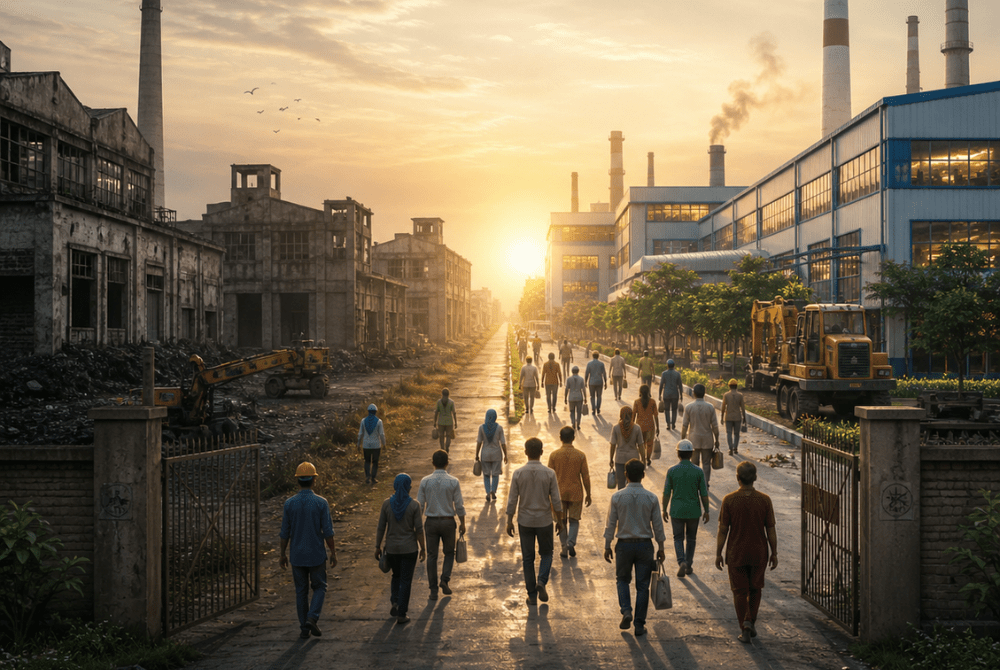
Bangladesh is moving toward a major industrial revival initiative, with the government planning to transfer around 50 closed and underperforming textile and jute factories to the private sector within the next year. The decision is expected to unlock fresh investment, improve production efficiency, and create new employment opportunities across key industrial zones. Officials believe that reviving these idle assets through private sector participation will play a critical role in strengthening the country’s manufacturing base.
Read More: US Surpasses India as Bangladesh’s Second Largest Trade Partner
The announcement came during the Deputy Commissioners’ Conference in Dhaka, where the Minister for Commerce, Industries, and Textiles and Jute highlighted the government’s broader vision of revitalizing the industrial sector. Reopening stalled factories and bringing them back into production has been identified as a priority to ensure economic stability and sustainable growth. By leveraging private sector expertise and capital, the government aims to transform these struggling units into productive and competitive enterprises.
Alongside factory revival, the government is also working on stabilizing market systems and ensuring the smooth supply of essential goods. A technology driven monitoring framework is being considered to oversee the supply chain from import to retail. This system is expected to improve transparency, reduce price gaps, and enhance accountability across different stages of distribution. Plans are also underway to strengthen the Trading Corporation of Bangladesh with an advisory council comprising both public and private sector experts.
At the same time, district administrators have proposed several measures to support industrial expansion at the local level. These include developing new industrial zones, restarting closed sugar mills, and addressing region specific challenges that hinder growth. The government has indicated that these proposals will be carefully evaluated and incorporated into future policy decisions.
In parallel, the Planning Ministry is preparing a new two year strategic framework focused on economic recovery, inclusive growth, and improved project execution. The strategy places strong emphasis on maintaining quality in development projects, reducing corruption, and ensuring timely completion. It also aligns with a long term ambition of building a one trillion dollar economy and creating up to 10 million jobs, with employment generation and environmental impact becoming key criteria in approving new projects.
Read More: Bangladesh Secures $1.9B Global Financing to Strengthen Economy
Special initiatives are also being introduced to support seasonal economic activities. For example, ahead of Eid ul Adha, a coordinated plan has been designed to ensure proper preservation of raw animal hides. This includes training at the local level, distribution of salt, and awareness campaigns to minimize wastage and protect value in the leather supply chain.
Overall, the combined focus on industrial revival, supply chain modernization, and strategic planning reflects a broader effort to strengthen Bangladesh’s economic foundation. By bringing idle factories back into operation and aligning policy with long term growth targets, the country is positioning itself for a more resilient and investment friendly future.