

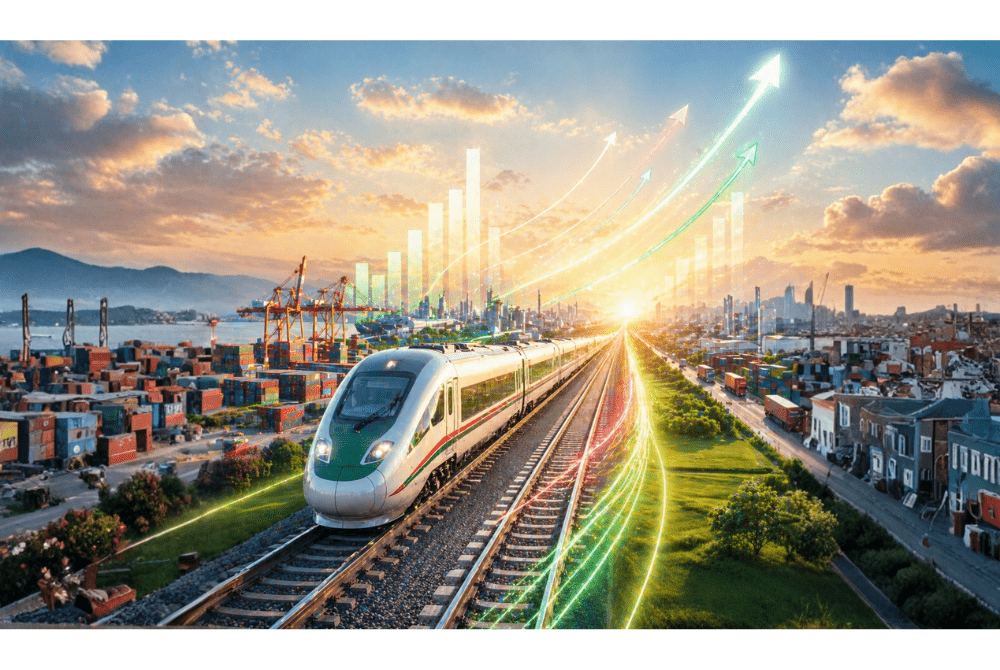
Bangladesh is set to unlock a new wave of economic expansion as the European Investment Bank moves forward with a €705 million financing plan for two major railway projects. The investment targets capacity expansion and electrification, both of which are expected to reduce logistics costs, improve trade efficiency, and accelerate overall economic activity.
A significant portion of the funding, around €600 million, will support the Laksam Chattogram Dual Gauge Double Track project. This section is a critical gap in the Dhaka Chattogram corridor, the country’s most important trade route linking the capital to the main seaport. Strengthening this corridor is expected to increase cargo capacity, reduce transit delays, and enable faster movement of export goods, directly contributing to higher trade volumes and revenue generation.
Read More: Northern Airport reopens to Unlock Billions in Economic Growth
The second project focuses on electrifying the Joydebpur Dhaka Narayanganj commuter line, marking Bangladesh’s first move toward electric rail operations. With a total estimated cost of Tk4,282.86 crore, the project is designed to deliver long term financial benefits by reducing operating and maintenance costs by approximately 35% compared to diesel systems. This efficiency gain can lower transportation costs for businesses and improve the competitiveness of supply chains across industries.
The initiative is also backed by strong international collaboration. The Asian Development Bank is contributing $400 million in the first tranche for rail expansion, while the EIB’s total commitments in Bangladesh have already reached €1.145 billion. These figures reflect growing global confidence in Bangladesh’s infrastructure and its long term economic trajectory.
Beyond infrastructure, the government is pushing for industrial value creation. Bangladesh has sought support from the European Union to manufacture European standard locomotives, coaches, and wagons domestically. Upgrading railway workshops in Saidpur, Ishwardi, and Chattogram with advanced machinery and technical expertise could stimulate local manufacturing, create skilled employment, and reduce reliance on imports.
Read More: Bangladesh Set to Edge Past India in Per Capita GDP by 2026
The economic impact of these projects extends across multiple sectors. Improved rail connectivity will allow faster movement of goods from production hubs to ports, reduce supply chain bottlenecks, and enhance reliability for exporters. Lower operating costs combined with higher capacity can increase profitability for logistics and manufacturing businesses while attracting new investment into the country.
With €705 million in new financing, a projected 35% reduction in operating costs, and enhanced trade connectivity on the busiest corridor, Bangladesh’s railway modernization is positioned as a key driver of economic prosperity, strengthening its role as a growing hub for regional trade and industrial development.