

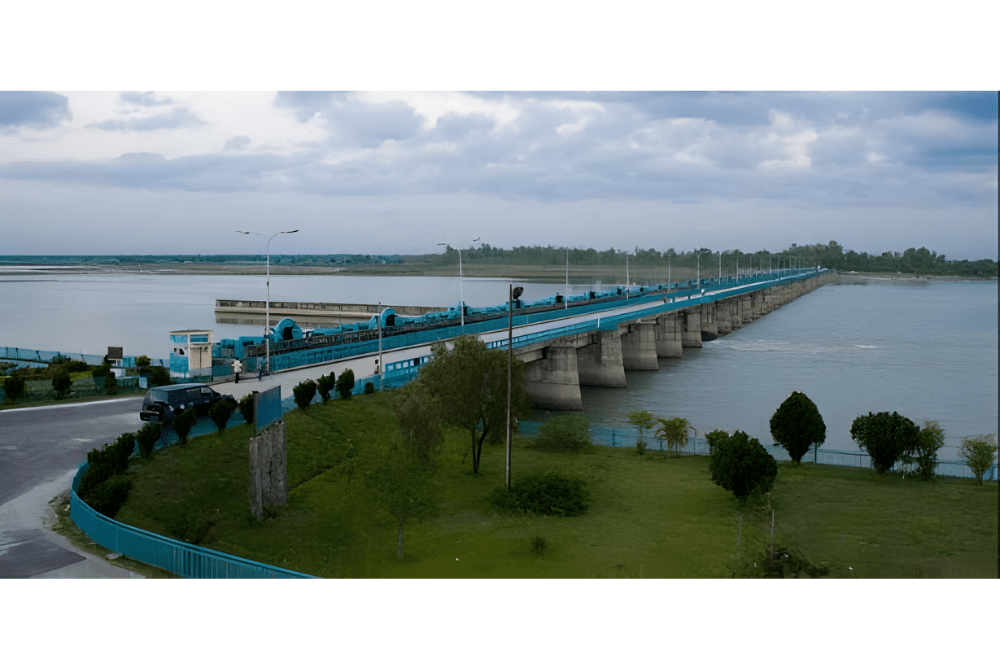
After over six decades of planning and feasibility studies, Bangladesh has finally decided to implement the long-awaited Padma Barrage project. The project aims to regulate the flow of the Padma River and improve water distribution across the country, particularly in the southwest and northwest regions. The total estimated cost of the project is Tk50,444 crore, and it will be implemented in two phases. The first phase, which has been proposed at Tk34,608 crore, will focus on constructing the main barrage structure and essential infrastructure.
Read More: Betopia Group: From Tk 500,000 to Tk 80 Million Monthly Payroll
The primary goal of the Padma Barrage is to counter the negative impacts of India’s Farakka Barrage, which has significantly disrupted the water flow into Bangladesh. The project will address rising salinity, restore river systems, and improve irrigation, hydropower generation, and navigation. It is expected to provide long-term benefits for agriculture, freshwater supply, and ecosystem protection.
The project will be implemented at Pangsha in Rajbari, identified as the most suitable site after extensive feasibility studies. The barrage will span 2.1 kilometers and feature 78 spillway gates, undersluice gates, and a 14-meter-wide navigation lock for vessels. Additionally, it will generate approximately 113 megawatts of hydropower and help ensure a reliable water supply to critical facilities such as the Rooppur Nuclear Power Plant.
The construction will begin in 2026, with the completion expected between March 2026 and June 2033. Once completed, the barrage will store around 2,900 million cubic meters of water, ensuring year-round water supply, improving irrigation across 1.9 million hectares, and helping safeguard the Sundarbans mangrove forest and its biodiversity.
Read More: Bangladesh Airlines Plan Major International Expansion in 2026
The economic internal rate of return for the project is projected to be 17%, with an estimated annual financial benefit of approximately Tk73,600 crore. The project is expected to play a crucial role in mitigating water-related challenges, such as erosion, sedimentation, and waterlogging, while boosting agricultural productivity and regional water security.
Despite the significant potential benefits, experts have warned of possible environmental and ecological risks. However, they emphasize that with advanced design and careful consideration of the impacts, these risks can be minimized, ensuring the successful implementation of the Padma Barrage project.