

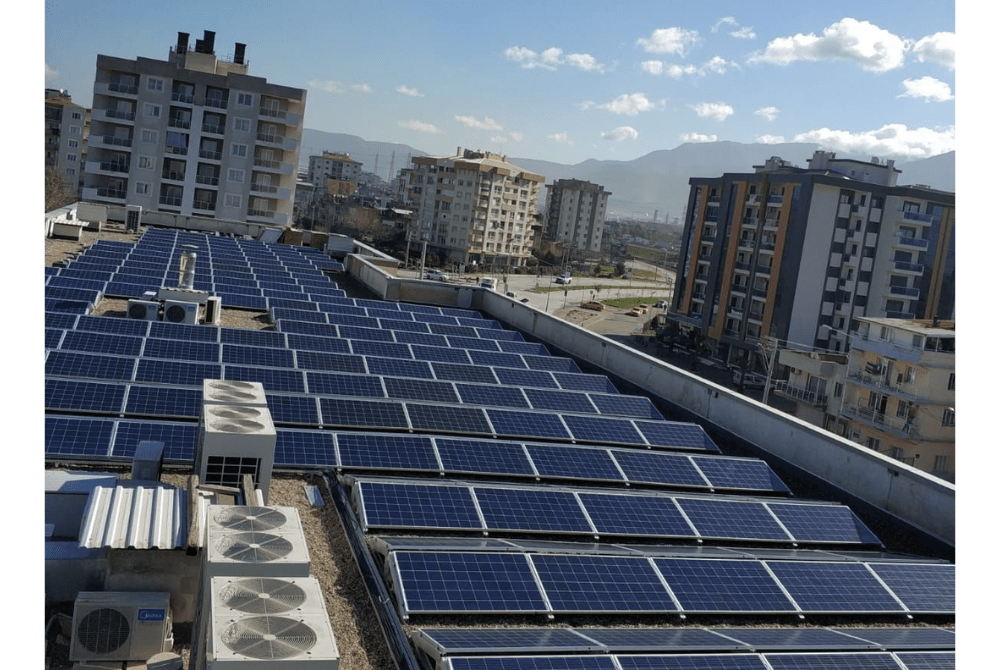
Bangladesh’s industrial sector is undergoing a significant and positive energy transition as rooftop solar capacity has surpassed 500 megawatts, marking a major milestone in the country’s journey toward sustainable and resilient manufacturing. This shift reflects not only a response to ongoing challenges such as gas shortages and rising electricity costs, but also a strategic move by factories to secure long-term operational stability and global competitiveness.
Over the past few years, factories across key sectors including garments, textiles, and heavy industries have increasingly adopted rooftop solar solutions. Today, more than 500MW of solar capacity has already been installed, and industry experts expect an additional 500MW to be added within this year alone. This rapid growth highlights strong momentum and confidence in solar as a viable and future-ready energy solution for Bangladesh.
Read More: PRAN-RFL to Invest Tk 500 Crore in Motorcycles and E Scooters, Targets 5,000 Jobs
One of the most impactful advantages of rooftop solar is its ability to meet 15 to 20 percent of a factory’s electricity demand. While it may not fully replace traditional energy sources, it plays a critical role in maintaining operations during power disruptions and reducing dependence on gas and diesel-based generation. In a context where energy supply uncertainty has become a recurring concern, this partial independence is proving to be highly valuable for industrial continuity.
Cost efficiency is another major driver behind this transition. The cost of solar installation has declined significantly in recent years, making it more accessible for industrial players. Currently, installing 1MW of solar capacity costs around Tk3.5 crore, compared to Tk5.5 crore just two years ago. Over a system lifespan of 20 to 25 years, the per-unit electricity cost from solar falls below Tk3.5, which is substantially lower than the national grid tariff of approximately Tk9.7 per unit. This cost advantage allows businesses to stabilize their long-term energy expenses while improving profitability.
Several leading industrial groups in Bangladesh have already demonstrated the effectiveness of this shift. For example, a 9MW rooftop solar system now supplies around 15 percent of electricity for one major garment manufacturer, reducing its reliance on captive power generation. Similarly, another leading apparel exporter has been using a 7MW solar installation for several years, covering approximately 12 percent of its energy needs. These examples illustrate how solar is becoming an integral part of industrial energy strategies rather than a supplementary option.
The adoption of rooftop solar is also being strongly influenced by global market dynamics. International buyers, particularly in the apparel and textile sectors, are increasingly emphasizing sustainability and carbon footprint reduction. Many global brands now require or encourage their suppliers to adopt renewable energy as part of their compliance standards. As a result, Bangladeshi factories are proactively investing in solar solutions to align with these expectations and maintain their position in global supply chains.
Government policy has played an important role in accelerating this transformation. The introduction of net metering in 2018 has been a key enabler, allowing factories to export excess electricity to the national grid and receive credits against their consumption. This system not only improves the financial viability of solar investments but also encourages efficient energy management. Additionally, the removal of previous capacity restrictions has given industries greater flexibility to install solar systems based on their actual needs.
Read More: Cashless Pathways: Unlocking Financial Inclusion Beyond Traditional Banking
Another important factor behind the rise of rooftop solar is its predictability and reliability. Unlike fossil fuel-based energy sources that are subject to price volatility and supply disruptions, solar energy offers a stable and consistent alternative. Factories can plan their energy costs more accurately over the long term, reducing exposure to sudden tariff increases or fuel shortages. This predictability is especially important in a competitive manufacturing environment where cost control is critical.
Despite these advancements, there remains significant untapped potential in industrial rooftop solar. Industry estimates suggest that Bangladesh could generate up to 2,000MW of solar power from available factory rooftops, while total demand for renewable energy in the sector could reach around 4,000MW. This gap indicates strong future growth opportunities, both in expanding rooftop installations and exploring alternative solutions such as shared or utility-scale solar projects.
Overall, the rise of rooftop solar in Bangladesh’s industrial sector represents a powerful example of how businesses can turn challenges into opportunities. By embracing renewable energy, factories are not only reducing costs and improving resilience but also contributing to a more sustainable and environmentally responsible future. With continued investment, supportive policies, and global alignment, rooftop solar is set to play an even greater role in shaping the next phase of industrial growth in Bangladesh.