

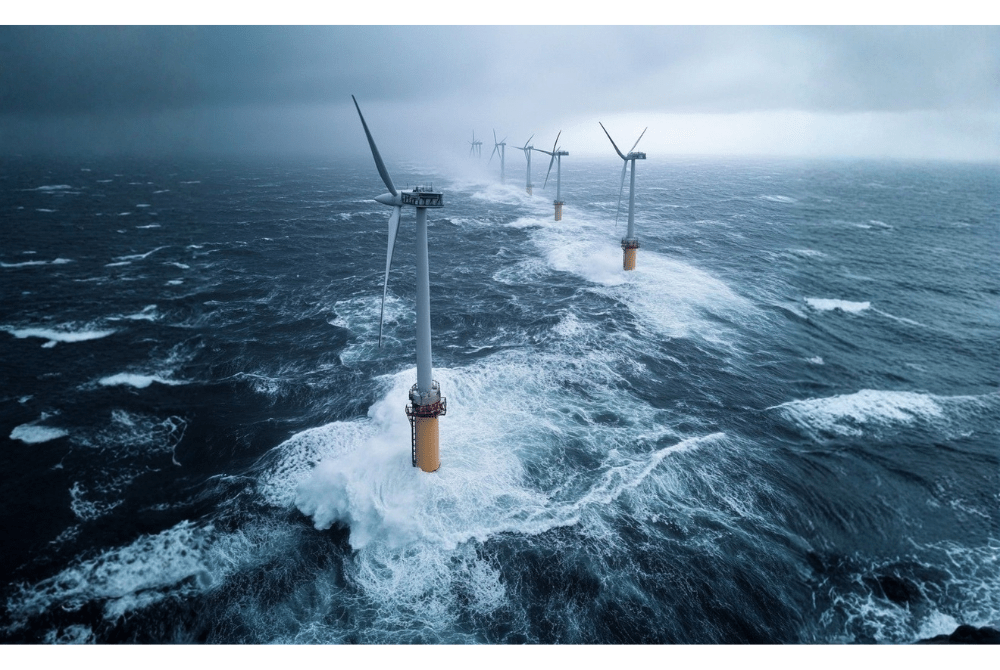
Bangladesh’s journey into wind energy is entering a new phase, with Cox’s Bazar emerging as the focal point of this transition. The 60MW wind power plant located in Khurushkul and Chowfaldandi stands as the largest operational wind project in the country, marking a shift from experimental pilots to commercial scale execution. Developed with an investment of around $120 million by US DK Green Energy BD Ltd, in collaboration with China’s SPIC Wuling Power Corporation, the project was inaugurated in March 2024 and quickly moved into full scale generation.
The plant consists of 22 wind turbines, each with a capacity of 3MW and blade heights reaching nearly 90 metres. Over its first two years of operation, the facility has supplied approximately 184 million kilowatt hours of electricity to the national grid. On average, it has produced around 10MW of power, reflecting a capacity factor of roughly 17 percent. The Bangladesh Power Development Board purchases this electricity at $0.12 per kWh, resulting in payments of about $22 million during this period.
Read More: Tech Innovation to Restore Market Trust
Despite having an installed power generation capacity of around 28,500MW, Bangladesh continues to face energy challenges due to heavy dependence on imported fuels. More than 95 percent of the country’s electricity generation is based on fossil fuels, with imports from countries like Saudi Arabia, the United Arab Emirates and Qatar accounting for nearly 90 percent of the supply. Recent global disruptions, including tensions affecting key energy routes such as the Strait of Hormuz, have intensified the urgency to diversify energy sources and reduce import reliance.
In this context, wind energy is gaining strategic importance. A 2018 study by the US Department of Energy’s National Renewable Energy Laboratory identified significant wind potential across Bangladesh’s coastal regions. According to the study, over 20,000 square kilometres of land experience wind speeds between 5.75 and 7.75 metres per second, translating into a gross potential exceeding 30,000MW. Coastal divisions such as Khulna, Barishal and Chattogram show particularly strong prospects, with wind speeds above 6 metres per second at higher altitudes.
Cox’s Bazar itself records an average wind speed of about 5.5 metres per second, with peak conditions between May and August. Wind turbines at the plant begin generating electricity at speeds as low as 3 metres per second and reach full capacity at around 9 metres per second. Interestingly, wind patterns tend to be stronger from afternoon to night, aligning well with peak electricity demand periods and improving the efficiency of power delivery.
One of the key advantages of wind energy in Bangladesh is its relatively low land requirement. Each 3MW turbine occupies only about 20 decimals of land, making it suitable for a densely populated country. However, challenges remain. The current capacity factor of 17 percent is lower than initial expectations of around 23 percent, partly due to variations in wind patterns in recent years. Experts suggest that better wind mapping, improved turbine design and site selection are essential to enhance performance.
Bangladesh’s earlier wind projects faced multiple setbacks. The first pilot plant in Feni, established in 2005, struggled with technical issues and inconsistent wind speeds. A 1MW plant in Kutubdia is currently non operational due to mechanical faults, while a 2MW project in Sirajganj has yet to achieve expected output despite completion. These experiences highlight the importance of accurate data and resilient infrastructure in scaling wind energy.
Looking ahead, momentum is building for expansion. Investors behind the Cox’s Bazar project have expressed interest in developing additional wind facilities, although policy approvals remain a critical factor. At the same time, a Danish firm is preparing a feasibility study for a 500MW offshore wind project, indicating growing international confidence in Bangladesh’s renewable sector.
A European Union funded study in 2022 identified six high potential coastal sites including Patuakhali, Moheshkhali, Inani Beach, Teknaf and Parki Beach. Proposed projects across these locations could add around 260MW to the grid. The study also estimated that such developments could help Bangladesh achieve up to 40 percent of its unconditional climate targets and reduce carbon emissions by approximately 609,737 tonnes annually.
However, climate risks remain a major concern. Bangladesh’s vulnerability to cyclones poses a threat to wind infrastructure, with past events such as Cyclone Sidr demonstrating the destructive potential of extreme weather. Experts recommend stronger turbine designs, water resistant components and innovative risk solutions such as parametric insurance to mitigate financial and operational losses.
Read More: Starlink Delivers Speed, But Not for All
Bangladesh has set ambitious targets to generate 20 percent of its electricity from renewable sources by 2030 and 30 percent by 2040. While solar energy has been the primary focus so far, wind power is gradually proving its relevance. The Cox’s Bazar project not only represents a technological milestone but also signals a broader shift in the country’s energy strategy.
From scattered pilot initiatives to a functioning large scale plant, Bangladesh’s wind energy story is evolving. If supported by consistent policy, investment and technological adaptation, wind power could become a significant contributor to the nation’s energy mix, reducing dependency on imports while advancing climate commitments and long term sustainability.