

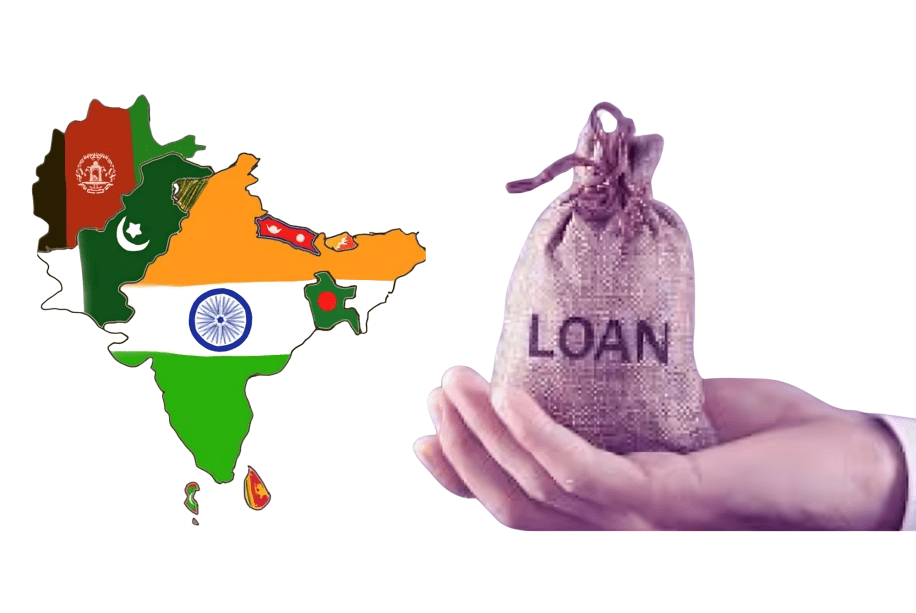
Bangladesh has seen the steepest rise in foreign debt repayments in all of South Asia, according to the World Bank’s International Debt Report 2025. In 2024 the country paid 7.3 billion dollars to service its external loans, a rise of 617 percent compared to 2010. No other country in the region experienced an increase on this scale.
Of the total amount paid last year, 4.9 billion dollars went toward repaying the original loan amounts. This figure was only 821 million dollars in 2010. Interest payments rose sharply as well, reaching 2.4 billion dollars in 2024 compared to just 203 million dollars in 2010.
Read More: Brazil overtakes India to become Bangladesh top cotton supplier with 1.9 million bales in MY25
Across the region as a whole, South Asian countries paid 95 billion dollars in loan servicing in 2024, an increase of 253 percent over the past fifteen years. Pakistan recorded the second highest rise at 251 percent, followed by India at 246 percent and Sri Lanka at 211 percent.
Economists say the rapid growth in Bangladesh’s repayment obligations is already squeezing the national budget. With more funds tied up in debt servicing, the government has less fiscal space to respond to urgent spending needs. At the same time, export earnings have not grown fast enough to match the rising debt burden.
Bangladesh has now crossed the International Monetary Fund’s warning level, which flags risk when a country’s external debt exceeds 180 percent of its annual export earnings. Bangladesh stands at 192 percent. The IMF downgraded the country’s risk rating from low to moderate in 2024 for this reason.
The World Bank report also shows that Bangladesh’s total external debt rose to 104 billion dollars in 2024, up from 26 billion dollars in 2010. By the end of the year the country spent 16 percent of its export income on debt repayment alone.
This surge comes at a time when the National Board of Revenue has missed its revenue target for the thirteenth consecutive year, limiting the government’s ability to handle rising repayment pressures.
Economist Mustafizur Rahman warned that Bangladesh is at risk of falling into a debt trap if current trends continue. A debt trap would mean the country would need to borrow new loans just to repay old ones. The chairman of the National Board of Revenue said the country has already entered such a situation and must acknowledge it to move forward.
Former World Bank economist Zahid Hussain said Bangladesh is not yet in a severe crisis but is moving in a risky direction due to what he called irresponsible borrowing. He noted that foreign funded projects should be approved only with proper planning and realistic repayment strategies. When project costs are inflated and funds are misused, repayment becomes much more difficult.
Bangladesh’s position, though concerning, is still stronger than that of Pakistan and Sri Lanka. Pakistan’s external debt is 315 percent of its exports, Sri Lanka’s is 280 percent and Nepal’s is 234 percent. India stands at 82 percent, while Vietnam remains far lower at 31 percent.
Read More: UK to continue duty free market access for Bangladesh exports until 2029
Economists recommend that Bangladesh immediately review ongoing foreign funded projects and reschedule those that are unlikely to generate enough revenue to repay associated loans. For projects not yet started, they suggest reviewing or restructuring disbursements and applying strict scrutiny to new borrowing proposals.
The World Bank report also highlights a global trend. Between 2022 and 2024 developing countries paid 741 billion dollars more in debt servicing than they received in new financing. This marked the largest net outflow related to debt in more than fifty years. Total foreign debt of low and middle income countries reached 8.9 trillion dollars in 2024, at a time when global interest rates are at their highest levels since before the financial crisis of 2008 and 2009.